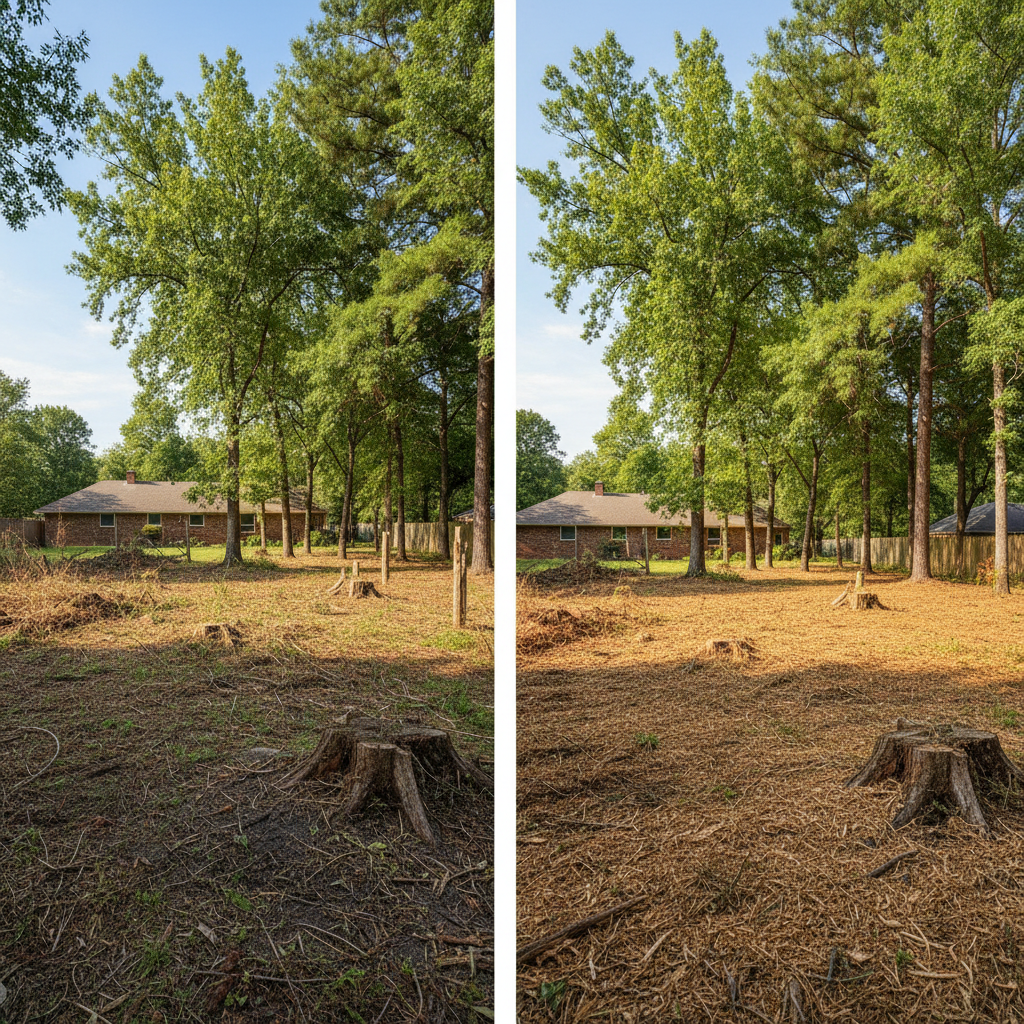
So, you've got some land in Nederland that needs clearing. Maybe it's gotten a bit wild, you're planning to build, or you just want to get some space back. Whatever your reason, you're probably looking at a couple of main ways to tackle it: forestry mulching or the old-fashioned cut and haul method. I've seen both done plenty of times around here, and honestly, each has its moments. Let's chat about what really works best for our part of Texas.
What's the Real Difference?
When I talk about traditional clearing, picture this: a crew comes in, chops down trees and brush, then hauls all that stuff right off your property. Sometimes they'll burn on-site if permits are okay and it's safe, but usually, the goal is just to get everything out. You end up with bare ground, often needing some grading work afterward.
Forestry mulching, though, that's a whole different animal. We use special equipment – usually a machine with a big, powerful rotating drum and teeth – that grinds up all the vegetation, trees, brush, even stumps, right where it stands. It turns everything into a layer of wood chips and organic material that just stays on the ground. Think of it like a giant blender for your land, if you will.
Cost: What's Your Wallet Saying?
This is usually the first thing people ask, and it's a fair question. Generally speaking, forestry mulching tends to be more affordable than the traditional cut and haul. Why? Well, you're not paying for all that labor to cut, stack, load, and then transport material off-site. No dump fees, no fuel costs for multiple trips to the landfill, and often, it's just a quicker process. The equipment itself is expensive, sure, but it really does get the job done efficiently.
Traditional clearing, on the other hand, can add up fast. Every truckload leaving your property means more money out of your pocket. If you've got a lot of big trees, you might need heavy equipment like excavators and bulldozers, and that's not cheap. Plus, if you have to bring in topsoil or do a lot of grading afterward, that's another expense to consider.
Durability & Regrowth: Keeping It Clear
Here's where mulching really shines, especially with our humid climate. When you leave that layer of wood chips, it acts like a natural barrier. It helps stop weeds from growing by blocking sunlight and keeps new brush from popping up so quickly. It also helps the soil hold onto moisture, which is a huge deal during our hot, dry summers. You'll still see some regrowth, but it's usually slower and less dense, making future upkeep a lot easier.
With traditional clearing, you often end up with bare, exposed soil. This can lead to faster erosion, especially with the heavy rains we get sometimes. And without that mulch layer, new weeds and brush can just explode. I've seen properties near Port Neches that were cleared traditionally, and within a year or two, they were starting to look overgrown again because there was nothing there to hold back the new growth. You'll be back out there sooner, either doing it yourself or hiring someone again, believe me.
Appearance: What Do You Want It To Look Like?
This is a big one for homeowners. If you want a completely clean slate, ready for construction or a perfectly manicured lawn, traditional clearing delivers that. You'll have bare dirt, and you can shape it however you like. It's a blank canvas, really.
Forestry mulching leaves a natural, kind of park-like appearance. You'll have a uniform layer of wood chips covering the ground. It looks neat, but it's definitely not bare dirt. Many folks prefer this look, especially if they're making walking trails, firebreaks, or just want to open up a wooded area without making it look like a construction site. It just blends in with the natural environment better. If you're planning to plant grass right away, you'll need to work that mulch into the soil or remove some of it, which does add an extra step.
Maintenance: What's Down the Road?
Long-term, mulched areas generally don't need as much intensive maintenance. That mulch layer breaks down over time, making your soil richer. It creates a healthier spot for any desirable trees you decide to keep. When regrowth does happen, it's often smaller and easier to manage with a brush hog or even just a heavy-duty mower.
Traditional clearing, because it exposes the soil and basically invites rapid regrowth, often means you're fighting the brush more aggressively later on. You might need to spray herbicides or bring in equipment more frequently to keep it clear, especially if you're not actively developing the land right away. Our soil around here, with all its clay, can get pretty compacted and hard when it's exposed, making it tough for anything new to take root properly without some serious work.
My Recommendation for Nederland Homeowners
For most residential land clearing projects in Nederland, especially if you're not immediately pouring a slab or laying down sod everywhere, I usually lean towards forestry mulching. It's generally more affordable upfront, better for controlling regrowth long-term, and it leaves your property looking more natural and healthier. It's a great way to open up your land, create defensible space, or get ready for future landscaping without completely stripping the earth bare. It's also less disruptive to the soil, which is a big plus in our area where erosion can be a real concern.
Now, if you absolutely need a perfectly flat, bare-dirt pad for a new foundation or a very specific landscaping plan that requires no organic material on the surface, then traditional clearing might be the way to go. But even then, you'll want to think about how you're going to manage that exposed soil afterward.
Give us a call at Classic Tree, and we can come out, take a look at your property, and talk through the best approach for your specific needs. We've got the equipment and the know-how to get it done right.