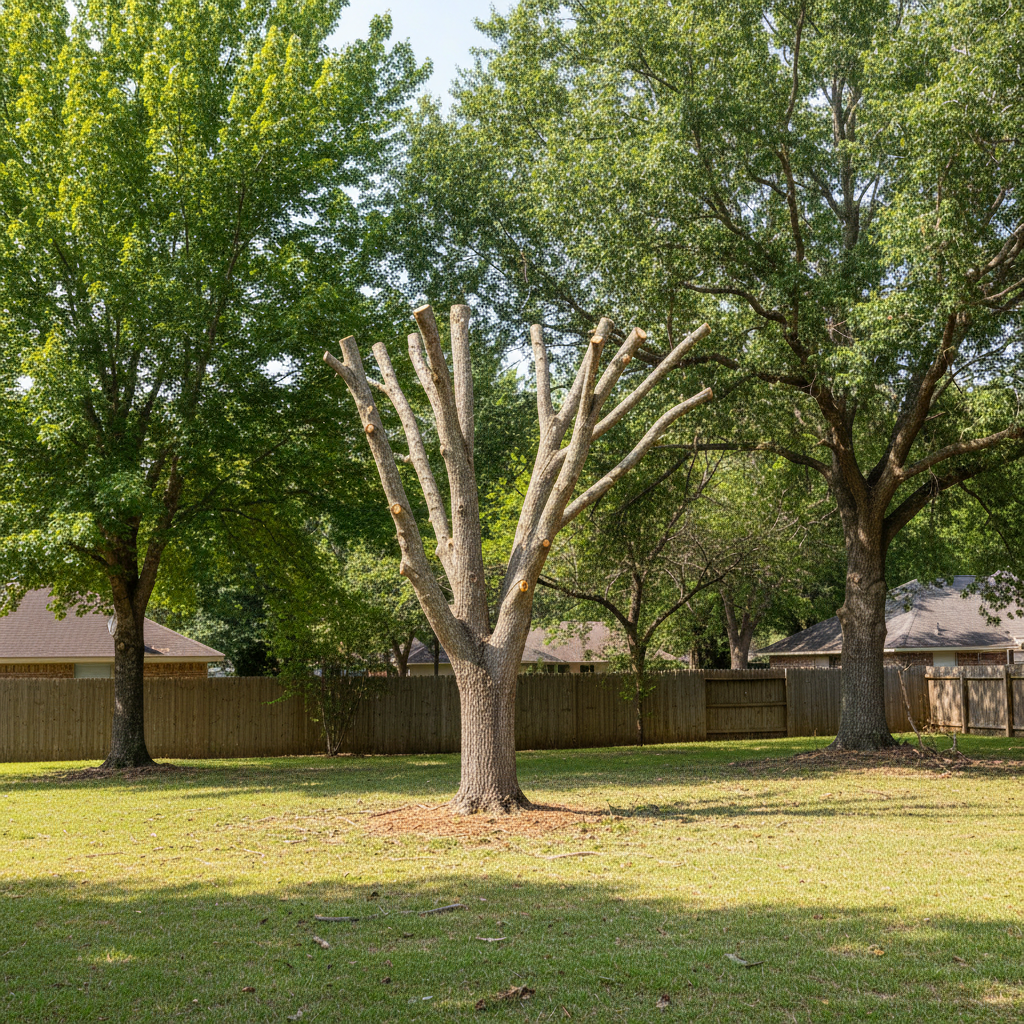
So, you’ve had your trees pruned. Maybe we did the work, or maybe you went with someone else. Either way, that’s a big step towards healthier, safer trees on your property. But the job isn’t truly done when the crew packs up and leaves. Pruning is a critical part of tree care, sure, but it’s also just one piece of the puzzle. You’ve got to follow up to really get the most out of that investment, especially with our Texas heat and humidity.
Extending the Life of Your Pruning Investment
Think of pruning like a good haircut for your trees. You wouldn't just get a cut and then never wash or style your hair again, right? Same goes for trees. The goal of proper pruning isn't just to remove dead or hazardous branches; it's to encourage healthy growth and a strong structure. To make sure that work pays off for years, you've got to keep an eye on things.
First off, consistent watering is huge, especially after a major trim. Your tree just used a lot of energy to heal those cuts, and it's going to need moisture to recover and push out new growth. Here in Nederland, we get plenty of rain sometimes, but those dry spells can be brutal. Deep, infrequent watering works better than shallow, frequent sprinkles. You want that water to soak down to the root zone, not just wet the surface.
Mulching is another big one. A good layer of organic mulch (like wood chips, not those dyed red rocks from the hardware store) around the base of your tree, but not touching the trunk, does wonders. It helps retain soil moisture, regulates soil temperature, and suppresses weeds that compete for nutrients. It's like a protective blanket for the roots, and it helps the tree recover faster from the stress of pruning.
What Regular Tree Maintenance Looks Like
Regular maintenance for your trees isn't just about calling us every year for another big prune. It's more about observation and small, proactive steps. You're the first line of defense for your trees, after all.
- Keep an eye on new growth: After pruning, you should see new shoots appearing. Are they growing in the right direction? Are they crowded? Sometimes, a few weeks or months after a prune, you might spot a 'water sprout' – a fast-growing, vertical shoot that pops up from an old cut or branch. These are usually weak and should be removed if they're not contributing to the tree's desired shape.
- Check for pests and diseases: Our climate here in Southeast Texas is a breeding ground for all sorts of bugs and fungi. Regularly walk around your trees and look at the leaves, bark, and branches. Are there any unusual spots, holes, or discolorations? Are leaves wilting or dropping prematurely? Catching these things early can save your tree.
- Clear the base: Make sure there's no grass or weeds growing right up against the trunk. This competes for nutrients and moisture, and it can also create a damp environment that encourages pests or diseases. Keep that mulch ring tidy.
Warning Signs of Problems
Even with the best care, trees can run into trouble. Knowing what to look for can help you decide when it's time to call in the pros.
- Unusual leaf changes: Yellowing leaves when they shouldn't be, leaves that are too small, or leaves dropping off out of season.
- Branch dieback: Sections of branches that suddenly look dead, brittle, or have no leaves. This can be a sign of disease, pest infestation, or root problems.
- Cracks or splits in the trunk or major branches: These are serious structural issues that need immediate attention.
- Mushrooms or fungi growing on the trunk or at the base: This often indicates internal decay, especially if it's a shelf-like fungus.
- Excessive sap leakage: While some sap is normal, a lot of sticky residue or weeping from the bark can signal a problem.
- Pest evidence: Sawdust-like material (frass), tiny holes in the bark, or visible insects.
Especially with our heavy, clay-rich soils in Nederland, root issues can sometimes manifest as canopy problems. If you see something that just doesn't look right, trust your gut.
When to Call a Professional
You don't need to be an arborist to keep your trees healthy, but you do need to know when to bring one in. Here at Classic Tree, we're not just about cutting things down; we're about keeping your trees alive and well.
You should call us, or another certified arborist, if you notice any of the warning signs I just mentioned. Don't wait until a branch falls or the tree looks completely dead. Early intervention can often save a tree that would otherwise be lost.
Also, if you're thinking about doing any pruning that requires a ladder, a chainsaw, or involves branches thicker than your wrist, it's time to call us. We've got the right equipment, the training, and the insurance to do it safely and correctly. Improper pruning can do more harm than good, creating entry points for disease or weakening the tree's structure. We see it all the time, especially when folks try to tackle those big live oaks that are so common around here in the Port Arthur and Nederland area.
Think of us as your tree doctors. We can diagnose problems, recommend treatments, and perform the necessary work to keep your trees healthy and beautiful for years to come. Your trees are a valuable asset to your property; let's protect them together.