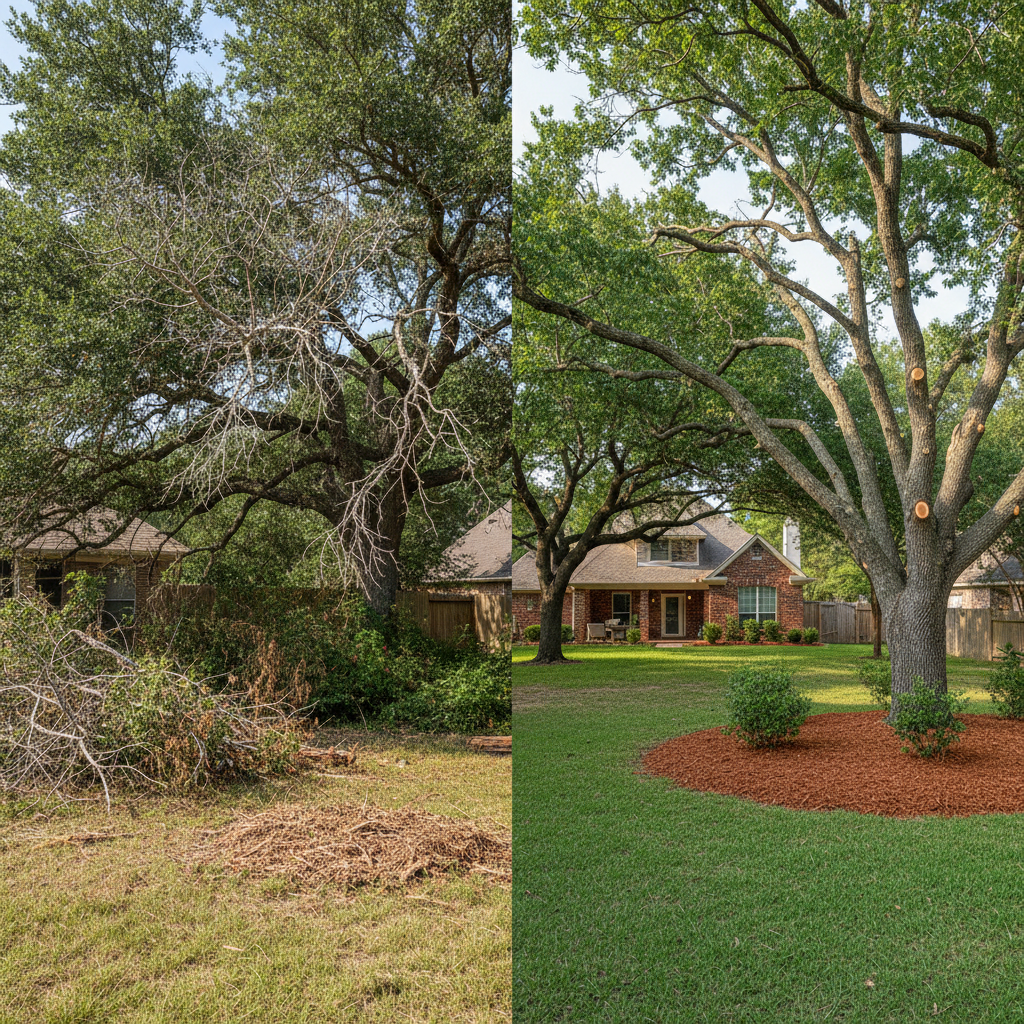
You've got trees on your property, and that's fantastic. They bring shade, beauty, and real value. But eventually, every tree needs a good trim. When you start looking into it, you'll hear terms like 'crown reduction' and 'crown thinning.' What's the real difference between them? And more importantly, which one makes sense for your trees right here in Nederland?
As someone who's spent years working with trees in this area, I've seen plenty of excellent pruning jobs — and, honestly, quite a few terrible ones. Let's talk plainly about these two common approaches. That way, you'll know exactly what you're asking for and, more importantly, what your trees truly need.
Crown Reduction: Sometimes, Less Is More
Crown reduction, which some folks call 'drop-crotch pruning,' does exactly what it says: we make the tree's crown smaller overall. Now, this isn't the same as topping, which is a hack job that leaves ugly stubs and really hurts the tree. Proper crown reduction means we carefully cut back branches to a side branch that's at least a third of the diameter of the branch we're taking off. It keeps the tree's natural shape, just a bit more compact.
Why might you want crown reduction?
- Clearance: Your tree might be growing into your house, getting tangled in power lines, or just hanging too low over the driveway. We see this a lot with those big Live Oaks in older neighborhoods like Port Acres, where they've had decades to really spread out.
- Storm Damage Prevention: A big, dense crown acts like a giant sail in the wind. Cutting it back a bit can make it much less likely to suffer major damage during one of our Gulf Coast storms.
- Health & Structure: Sometimes a tree just grows too big for its root system, or it has some structural issues. Reducing the crown can take a lot of stress off the tree.
- Light & Airflow: If a tree is casting your entire yard into shadow or blocking light from your house, reduction can definitely help.
Cost, Durability, and Appearance with Crown Reduction
Cost: This usually costs more than just thinning. It takes more time, requires more skill, and often needs specialized equipment to safely remove those bigger sections of the canopy. So, yeah, it's typically pricier upfront.
Durability: If we do it right, crown reduction can actually improve the tree's long-term health and make it stronger against wind and heavy rain. But if it's done wrong (like topping), it's a disaster for durability, basically inviting disease and decay. What a mess.
Maintenance: You won't need to do this as often as thinning, but when you do, it's a bigger job. Plan on revisiting it every few years, depending on how fast the tree grows and how much we reduced it.
Appearance: A tree that's been properly reduced should still look natural, just a bit smaller. The whole point is to keep its species-specific shape. It definitely shouldn't look like someone just took a chainsaw to the top.
Crown Thinning: Letting the Light In
Crown thinning is a completely different animal. Here, we're not trying to make the tree smaller overall. Instead, we're carefully removing smaller, interior branches throughout the crown. Think of it like giving the tree a good haircut and letting some air circulate.
Why would you want crown thinning?
- More Light: This is a big one. If your lawn or garden under the tree isn't getting enough sun, thinning really opens up the canopy.
- Better Air Circulation: Good airflow through the crown can cut down on the risk of certain fungal diseases, which is a real concern in our humid climate, wouldn't you say?
- Less Wind Resistance: By taking out some of those interior branches, wind can pass through the tree more easily. This reduces the chance of a major branch breaking in a storm.
- Removes Deadwood & Weak Branches: We also take out any dead, diseased, or crossing branches that could cause problems down the road.
Cost, Durability, and Appearance with Crown Thinning
Cost: Generally, thinning costs less than a full crown reduction. It's often a quicker job, focusing on smaller cuts and less overall material being removed.
Durability: Thinning really helps the tree become more resilient. By letting wind pass through and getting rid of weak points, you're making the tree stronger against storms. It also helps promote healthier growth because there's less competition for light and nutrients within the crown.
Maintenance: This is something you'll want to do more regularly, maybe every 1-3 years for mature trees, just to keep them healthy and looking good. It's more about ongoing care.
Appearance: A thinned tree should look lighter, more open, and healthier. You shouldn't see big gaps or a drastically changed shape; it should just look like a well-maintained tree.
My Recommendation for Nederland Homeowners
Alright, so which one should you pick? For most homeowners in Nederland, crown thinning is definitely the go-to maintenance practice. It's fantastic for your trees' long-term health, especially with the humidity and the storm risks we deal with. Regular thinning keeps your trees strong, cuts down on disease potential, and makes them much more resilient when the wind really starts to howl.
Crown reduction absolutely has its place, but it's usually for specific problems. If your tree is genuinely too big for its spot, hitting your roof, or posing a serious hazard because of its size, then reduction is the answer. But don't just reduce a tree because you think it's 'too tall.' Often, a good thinning job will give you many of the benefits you're looking for without the more drastic cuts of reduction.
No matter what, always make sure you're working with someone who understands the difference and practices proper arboriculture. You really don't want someone just hacking away at your trees, do you? At Classic Tree, we always check out your specific trees and your property's needs to suggest the right approach. We'll tell you straight what we think is best for your trees and your wallet.